Google Ads Audit
Account 8007771142 · 28 September 2026 · windows: last 30 / 90 / 365 days, plus Q4 2025 for seasonality
1Scorecard
What's already right, and what we'd change.
Working well — don't change
- ROAS 9.89 over 12 months on £8,040 spend
- Conversion tracking is clean — no double counting, data-driven attribution live, values agree to within 2.5%
- Brand excluded from PMax correctly, so Shopping isn't buying your own name
- Brand search is exceptional — ROAS 119, Quality Score 10/10
- Feed-only PMax is a deliberate, sound choice — keeps spend on Shopping
- Headbands earn their share — best conversion rate in the account at 6.87%
- Clean naming and structure — easy to manage and extend
Where the money is
- Raise the PMax budget — it has spent its full budget for six weeks
- Show up on 90%+ of searches for your name — raise brand max CPC 10p → 20p, budget to £4/day
- Rewrite product titles — customers search "bridal bag", not "pouch"
- Restock the Medium tartan pyjamas — £368 last Q4, sold out so not showing
- Fund the starved winners — laptop sleeves, robes, bows
- Standardise product images — same size, same framing, 2048 × 2048
- Ramp budget for Christmas on a dated calendar
2Brand vs non-brand
Two very different jobs, so we judge them separately.
Brand is people typing "Clementine & Mint" into Google. They already know you, so it's cheap and returns a lot. Non-brand is Performance Max showing your products to people searching for things like "bridal headband" or "velvet bow". That's where new customers come from, and it's the number to judge the budget on.
| Period | Type | Spend | Revenue | ROAS | Share of revenue |
|---|---|---|---|---|---|
| Last 12 months | Brand | £203 | £24,107 | 118.9 | 30% |
| Non-brand | £7,837 | £55,443 | 7.07 | 70% | |
| Last Christmas Oct–Dec 2025 | Brand | £71 | £9,574 | 135.1 | 42% |
| Non-brand | £1,771 | £12,997 | 7.34 | 58% | |
| Last 90 days | Brand | £49 | £4,400 | 90.5 | 21% |
| Non-brand | £2,395 | £16,505 | 6.89 | 79% | |
| Last 30 days | Brand | £17 | £986 | 58.4 | 20% |
| Non-brand | £746 | £3,903 | 5.23 | 80% |
Brand is cleanly separated: your name is excluded from Performance Max, and we checked every one of its search categories to confirm your name isn't leaking in.
3The budget is the bottleneck
PMax has spent its whole budget for six weeks. It averaged £27.63 a day on a £28 budget. When the budget was cut to £22 on 11 September, spend dropped straight to £22.20 a day. The budget is setting the spend, not demand.
Note: the campaign's own "budget lost impression share" reads 1.3%, which looks healthy. That metric is unreliable on Performance Max — spend ÷ budget is the real test.
Recommendation
| Campaign | Today | Recommend now | Reason |
|---|---|---|---|
| PMax — All Products | £22/day | £32/day | Spends its full budget; was £28 until 11 Sep |
| Brand — UK Search | £1.50/day | £4/day | Will bind once CPC rises + Q4 demand |
Also worth adding a target ROAS of 5.5–6.0 to PMax. It currently runs on Maximise Conversion Value with no floor, so there's nothing protecting efficiency as budget goes up.
4Christmas is the whole game
November and December carry the year. The pattern has repeated two years running.
Where the efficiency actually sits, week by week
Early and mid October is the weakest stretch of Q4 (ROAS 5–6). Don't ramp then — ramp from late October.
Budget calendar
| Period | PMax /day | Brand /day | Why |
|---|---|---|---|
| Now → 12 Oct | £32 | £4 | Back above the old £28 |
| 13 – 26 Oct | £30 | £4 | Weakest ROAS stretch — hold |
| 27 Oct → 16 Nov | £40 | £5 | ROAS climbs to 14–16 |
| 17 – 30 Nov BFCM | £55–65 | £8 | Peak efficiency: ROAS 23.5, CVR 8.9% |
| 1 – 18 Dec | £55 | £8 | Highest volume; 14 capped days last year |
| 19 – 24 Dec | £35 | £5 | Last posting dates |
| 25 Dec → 5 Jan | £22 | £3 | Volume collapses |
Step up by about 30% at a time, and make the BFCM increase by 17 November so the campaign is settled before peak. Judge it on marginal return, not blended ROAS.
5Product mix
Headbands dominate — and they've earned it. The problem is elsewhere.
Underfunded winners
| Line | Share of spend | ROAS | Note |
|---|---|---|---|
| Laptop sleeves | 3.9% | 10.81 | Brown Gingham sleeve returns ROAS 19.90, the second-best product in the account |
| Robes | 2.9% | 10.02 | Highest AOV in the catalogue, ~£214/order |
| Scrunchies | 2.5% | 9.42 | ROAS 12.05 last Q4 |
| Bows | 4.1% | 6.57 | Quiet now, but 30% of spend last Q4 |
6Product titles
The highest-value fix on this list, and the data tells us exactly what to write.
What customers actually type
| Search | Sales | Value |
|---|---|---|
| wedding guest headband | 8.9 | £377 |
| velvet alice band | 8.2 | £458 |
| butter yellow headband | 7.6 | £346 |
| linen headband women | 7.1 | £310 |
| pale blue headband | 6.3 | £384 |
| padded headband | 6.1 | £298 |
| bridal bag satin | 4.5 | £259 |
| bridal bag | 4.3 | £203 |
| bridal clutch | 2.9 | £140 |
The winning pattern is colour + material + product + occasion. Nearly every title instead starts with "The" and ends with the same brand boilerplate.
Suggested rewrites
How these were built. Start with colour + material + product, so one title catches both the broad search ("brown headband", 6 sales) and the specific one ("brown satin headband", 2 sales from 8 clicks). Then add the words people actually bought with: "wedding guest" (9 sales), "bridal" (5), "pale blue" (6), "alice band" as two words (11), "for women", "makeup bag". Leave out words nobody searches, like "handmade", "luxury" and "hair accessory". They belong in the description. Only use words that are true of the product: the brown headband is slim, so "padded" would pull in people who then don't buy, and the white pouch is linen, so the satin searches ("bridal bag satin", "white satin bag", about 10 sales) belong on the satin pouches' titles instead.
Length. Google allows 150 characters, but shoppers see far less: roughly the first 70 on desktop and around 30 on a phone, where most of your sales happen. So the first 30 characters must say what the product is (all three above do), and the whole title should aim for 70 or under. That's why "Clementine & Mint" is gone from the end: your shop name already shows on every Shopping ad, and your name is excluded from Performance Max anyway. Your current titles run to about 100 characters, and most of the visible part goes on "THE", capitals and the brand boilerplate rather than words people search.
What's wrong, by the numbers
| Issue | Products | Impact |
|---|---|---|
| Written in ALL CAPS | 187 of 234 | Reads as spam; 68% of spend |
| Start with the word "The" | 233 of 234 | Wastes the highest-weighted position |
| End in the same brand boilerplate | 228 of 234 | Spends title space on words nobody searches |
| Stray apostrophe in the title (e.g. HEADBAND' |) | most | Looks unfinished in the Shopping tile |
| Pouches & pyjamas tagged "Linen Headbands" | 14 | Actively tells Google the wrong category |
| Duplicate titles competing with each other | 6 listings | Splits sales data; one twin gets 0 sales |
| Product groups built from hand-typed item IDs | 282 IDs | New products stay off until added by hand |
Start with the top 20 products by spend — they carry 54% of spend, so the work is bounded.
Build product groups from product type, not item IDs
Right now your campaigns pick products from 282 item IDs typed in by hand. Any new product stays switched off until someone adds its ID. Every live product is included right now, but only because the list is being kept up to date by hand.
You don't need to change anything in the feed to fix this. Every product already has a product type in Shopify ("headband", "bow", "pouch" and so on), and Google Ads can build product groups straight from product type. A new headband then joins the headband group on its own.
| Product group | Shopify product types in it | Products |
|---|---|---|
| Headbands | headband | 69 |
| Bows | bow | 39 |
| Scrunchies | scrunchie, scrunchie with bow | 33 |
| Bags | pouch, laptop sleeve | 25 |
| Kids | children's headband, children's bow, the little one | 43 |
| Nightwear | pyjamas, robe, women's stripe set | 13 |
| Decorations | stocking decoration | 10 |
2. The Blue Gingham Bunny Basket is typed "stocking decoration". Give it its own type (e.g. "easter basket") so it doesn't run with the Christmas stockings.
3. When the product groups are rebuilt, build them on product type instead of item IDs. It's safe to tidy the product types any time, because nothing changes in the ads until the groups are switched over.
This is also what makes the January campaign for laptop sleeves, robes and bows (section 5) a few clicks rather than a rebuild. Custom labels are only worth using for things product type can't say, such as tagging your velvet and tartan pieces as "christmas" across every category. That's optional.
7Don't prune before Christmas
Products that look dead in September are the ones that carry December.
| Product | Now (90d) | Last Q4 | Verdict |
|---|---|---|---|
| Burgundy Velvet Maxi Bow | 0 sales | £1,649 · ROAS 6.15 | Leave alone |
| Red Velvet Scrunchie | 0 sales | £215 · ROAS 62.68 | Leave alone |
| Navy Velvet Headband | 0 sales | £260 · ROAS 22.71 | Leave alone |
| Black Watch Tartan Headband | ROAS 1.36 | £589 · ROAS 13.56 | Leave alone |
| Children's headbands (line) | ROAS 2.21 | ROAS 8.61 | Hold, review January |
| Product | Last Q4 | Today | What to do |
|---|---|---|---|
| Black Watch Tartan Pyjamas — Medium | £368 · ROAS 9.06 | Still on sale. Medium is sold out; Small and Large are running | Restock Medium before November if you can. It switches back on by itself. |
| Cream Tweed Headband | £265 · ROAS 19.24 | No longer on your website (last ad Feb 2026) | Nothing, unless it's coming back |
| Navy Velvet & Tartan Ruffled Pouch | £232 · ROAS 7.51 | No longer on your website (last ad Nov 2025) | Nothing, unless it's coming back |
If the tweed headband or the tartan pouch is coming back this winter, let us know. Both were among last Christmas's most efficient products. It also explains why the search "tweed headband" got 19 clicks and no sales: there's no tweed headband to buy any more. If tweed isn't returning, add "tweed" as a negative keyword.
What to actually pause
| Product | Spend | Why |
|---|---|---|
| Navy Blue Linen Aliceband | £17.97 | ROAS 0.20. The "pre order June delivery" wording has now come off the title, so give it three weeks and pause it if sales don't follow |
| Duplicate Black Watch Tartan Pyjamas listing | £27.63 | 73 clicks, 0 sales, while its identical twin sells |
8Brand search
The goal: your ad shows on 90% or more of Google searches for your name. Today it's about 85%.
| Keyword | Match | Impression share | Lost to rank | ROAS |
|---|---|---|---|---|
| clementine and mint | Exact | 93.2% | 6.7% | 106 |
| clementine and mint | Phrase | 57.8% | 40.2% | 38 |
| clementine & mint | Phrase | 74.2% | 25.8% | 49 |
Your exact-match keyword is already at 93%. The ~85% campaign average is dragged down by the two phrase keywords, and all of that loss is bid, not budget (budget lost: 0.5%). So the bid is the only lever.
2. Raise the budget to £4/day at the same time, or a higher CPC plus Christmas demand will simply hit a different ceiling.
One correction to an earlier assumption
Search partners were worth turning off — but they delivered 4 impressions and £0.00 in 90 days. It's tidy housekeeping, not a performance fix, and it won't move impression share.
9Product imagery
The same kind of product looks bigger in one photo and smaller in the next.
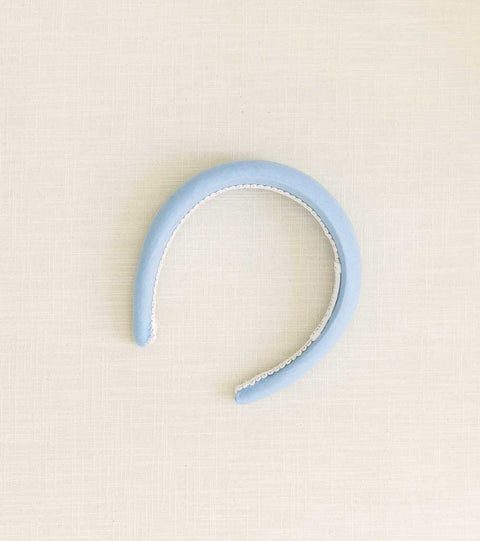
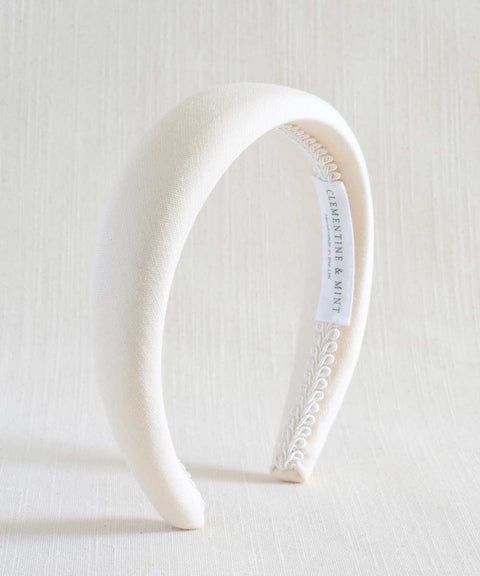
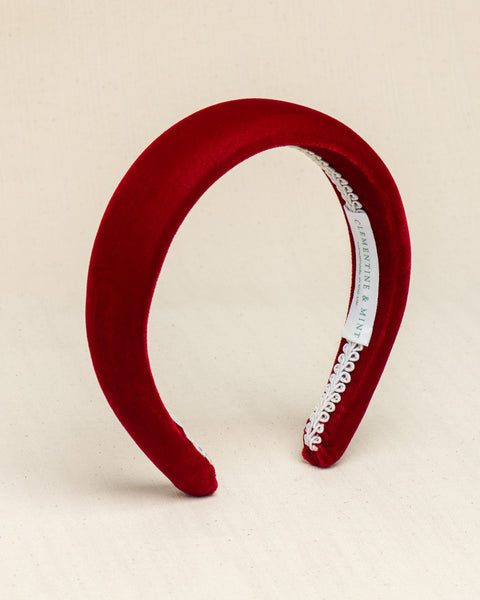
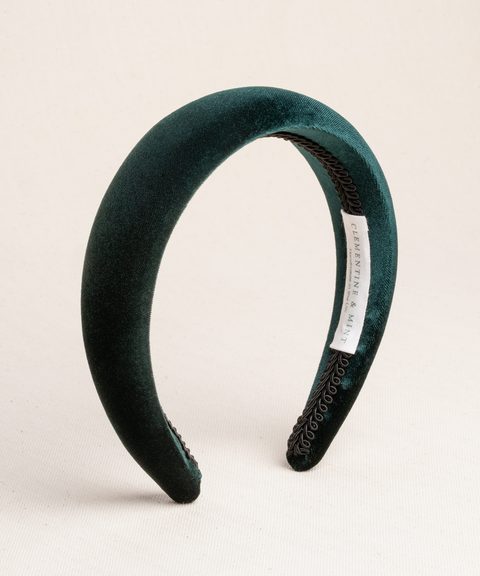
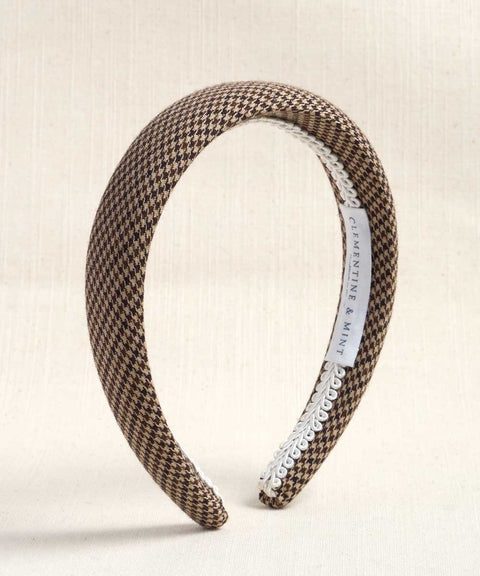
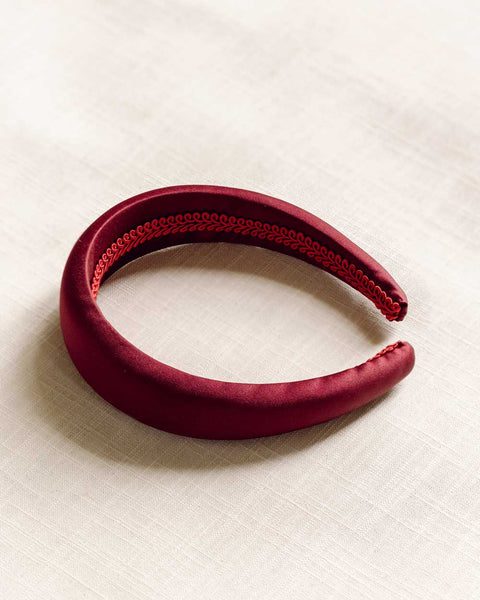
Six of your current headband main images, shown side by side at the same width. The Cornflower Blue fills well under half its frame while the Brown Houndstooth and Forest Green fill most of theirs. Some stand upright and face the camera, others are shot from the side. Next to each other in a Google Shopping grid, that makes some headbands look bigger or more premium than others for no reason.
| Measure | Finding |
|---|---|
| Main images in a 4:5 shape | 140 of 227 |
| Main images in a 5:6 shape | 76 of 227 |
| Other shapes | 11 of 227 |
| Different image sizes across all 959 product photos | 88 |
| Square photos | 1 of 959 |
Vertical version (optional): 1676 × 2048 pixels (a 9:11 shape). Google's guide for clothing and accessories names 9:11 as the ideal shape for vertical images. Google decides when to show a taller layout, not you, so keep the square as the main image and add the vertical as an extra image. Your current 4:5 photos are close to this shape already, so recropping them is a good start.
Framing: the product fills 75–90% of the frame, which is Google's own guidance, and the same amount on every product in a category.
Angle and position: the same angle for every product of a type (for example, every headband upright and front-on), centred, and on the same background.
How to keep it consistent. When shooting, keep the camera on a tripod at a marked distance so every headband comes out the same size. When editing, make one 2048 × 2048 template (Canva works) with guide lines 5–10% in from each edge, and size every product to touch the same guides. The background doesn't have to be white. What matters is that it's the same on every main image. Keep lifestyle and on-the-head shots as the second and third images. Start with the top 30 products by spend.
10Conversion tracking
We stress-tested this before trusting any number in the report. It's healthy.
| Check | Result | Detail |
|---|---|---|
| Double counting | Clean | Three purchase tags exist; only one counts. Correct. |
| Attribution | Data-driven | Genuinely active, not silently falling back to last-click |
| Value accuracy | Within 2.5% | AOV agrees across all three tags (£51.13–£52.34) |
| Default-value leakage | None | The £43.92 fallback never fired |
| Tag outages | None | Fired on 353 of 365 days; gaps are normal variance |
| Lookback window | Right-sized | 73% of sales happen within a day |
| GA4 agreement | −28% | GA4 undercounts despite a 3× longer window |
| Enhanced conversions | Verify | Not visible via the API — check in the interface |
Low priority, for when you have time. Google Ads shows three warnings on the purchase tag. Sales are recording properly, so none of this affects your results today. They're tidy-ups that give Google a bit more detail about each order:
- Some sold products can't be matched to your Merchant Center products
- Many sales don't include cart data (which products were in the basket)
- Cost of goods isn't set for all products
The easiest way to fix them is to ask Claude to walk you through it. Paste in something like: "My Google Ads purchase conversion says sold item IDs can't be matched to Merchant Center, many conversions don't have cart data, and cost of goods isn't available. I'm on Shopify with the Google & YouTube app. Walk me through fixing each one, step by step."
11Smaller wins
| Finding | Cost | Action |
|---|---|---|
| 11 live products still have "coming-soon" in their web address | — | Rename the URLs in Shopify (tick "create redirect") |
| No negative keywords anywhere | ~£20/mo | Add 4–6 exact-match negatives only (see note) |
| Desktop converts at just over half the mobile rate | 3.32% vs 5.86% | Worth a look at the desktop product pages |
| Christmas Collection asset group paused (inside the main PMax, where it ran last Christmas: £302 spent, £2,428 back) | No extra budget | Turn it back on. Leave the separate "Performance Max - Christmas" campaign off: it has never run |
| Tracking template writes campaign numbers into GA4 | — | Swap to campaign names |
| Duplicate paused brand campaign | — | Delete to keep things clean |
12What to do, in order
Sequenced so everything is settled before the peak.